
Table of Contents
- 1. Pump Protection | Pressure, Flow, Temperature Instruments
- 1.1. Why Pump Protection Needs More Than One Instrument Type
- 1.2. Where Protection Instruments Are Typically Installed on a Pump
- 1.3. Pressure Switches and Transmitters for Pump Protection
- 1.4. Flow Switches and Meters That Prevent Dry Running
- 1.5. Temperature Instruments for Bearing and Motor Protection
- 1.6. Building a Combined Protection Package for a Single Pump
- 1.7. Choosing the Right Combination for Your Pump Type
- 1.8. Typical Pump Protection Applications in UAE Facilities
- 1.9. Common Pump Protection Mistakes to Avoid
- 1.10. Source Pump Protection Instrumentation in the UAE and Gulf
Pump Protection | Pressure, Flow, Temperature Instruments
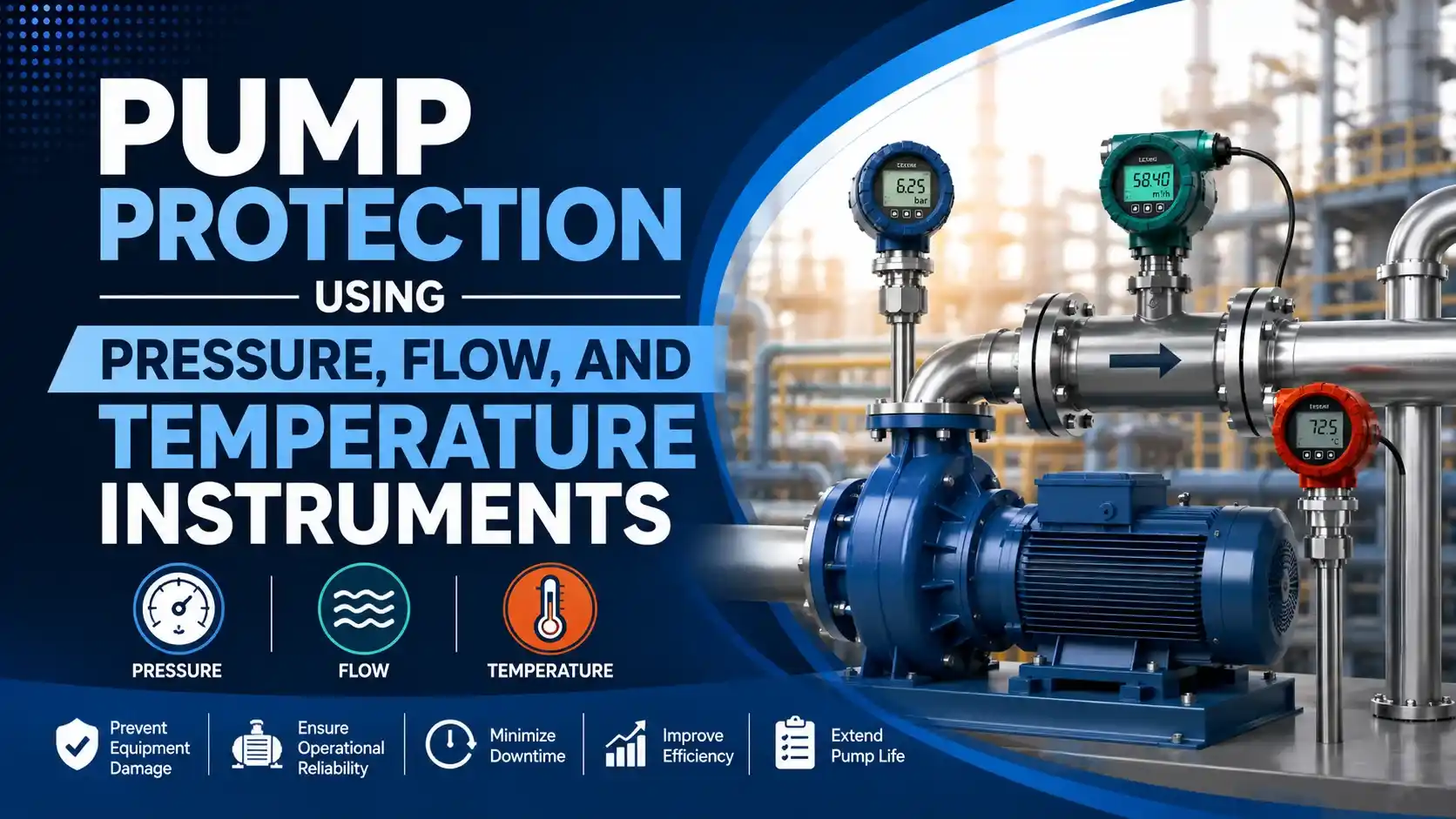
A pump rarely fails without warning. Long before a bearing seizes or a mechanical seal lets go, the process is already telling the story through rising discharge pressure, falling suction flow, or a slow climb in bearing temperature. The instruments that matter most in pump protection are not exotic. They are the same pressure, flow, and temperature devices already used across the rest of a plant, applied specifically at the points where a pump gives the earliest warning of trouble.
This guide sets out how pressure, flow, and temperature instrumentation work together to protect centrifugal and positive displacement pumps across UAE oil and gas, water treatment, HVAC, and power facilities, and how to choose the right combination for a given pump duty.
Why Pump Protection Needs More Than One Instrument Type
Pumps fail for different underlying reasons, and no single instrument catches all of them. A pump can run dry with perfectly normal discharge pressure for a short period before damage begins. A bearing can overheat while flow and pressure both look completely normal. This is why a proper pump protection package pairs pressure, flow, and temperature monitoring together rather than relying on any single measurement, similar to the reasoning behind combined switch and transmitter devices such as the United Electric Controls One Series used elsewhere in critical process protection.
Pressure Related Failures
- Deadheading against a closed discharge valve
- Loss of seal oil or seal pot pressure
- Suction blockage or strainer fouling
Flow Related Failures
- Dry running when suction supply is lost
- Cavitation from insufficient net positive suction head
- Low flow recirculation heating the pump internally
Temperature Related Failures
- Bearing overheating from lubrication loss
- Motor winding overheating under sustained overload
- Mechanical seal overheating from dry running or misalignment
Where Protection Instruments Are Typically Installed on a Pump
A simplified layout showing typical mounting points for suction flow, discharge pressure, seal pot, and bearing temperature instruments on a pump skid.
Pressure Switches and Transmitters for Pump Protection
Discharge pressure monitoring is the most common form of pump protection, catching deadheading, blocked lines, and worn impellers before they cause a trip on motor overload. Suction pressure monitoring adds an earlier warning layer, particularly on pumps drawing from a tank or wet well where a low level can starve the suction line before flow instrumentation reacts.
On pumps with mechanical seals, seal pot pressure monitoring protects the seal faces directly, since a loss of seal fluid pressure is often the first sign of an impending seal failure. Electronic switches with a built in digital display, such as the One Series electronic switch, combine the switch output with local indication in a single device, reducing the number of process connections needed on a compact pump skid. Where continuous trending is preferred over a simple threshold alarm, a pressure transmitter feeding the DCS allows maintenance teams to watch discharge pressure drift over weeks rather than reacting only at the moment of a trip.
Flow Switches and Meters That Prevent Dry Running
Flow instrumentation is the fastest way to catch dry running, since a pump can lose suction flow while discharge pressure briefly appears normal due to trapped fluid in the line. A simple flow switch set to a minimum threshold will trip the pump before a mechanical seal or bearing runs without lubrication for long enough to cause damage.
On larger or more critical pumps, a continuous flow transmitter is often preferred over a switch alone, since it also supports minimum flow bypass control on pumps prone to cavitation at low flow rates. The same technology selection logic covered in our guide to flow measurement applies directly here: electromagnetic meters suit conductive process fluids well, while paddlewheel and turbine style flow switches remain a cost effective option for a simple threshold trip on clean water services.
Temperature Instruments for Bearing and Motor Protection
Bearing and winding temperature are the slowest moving of the three parameters, but they are often the most telling indicator of developing mechanical trouble. RTD sensors mounted directly in the bearing housing give a precise, continuous reading suited to feeding a temperature transmitter for trending, while simpler temperature switches provide a straightforward high temperature trip for smaller pumps where full trending is not required.
A resistance temperature detector is generally preferred over a thermocouple for bearing monitoring, since its accuracy and stability are better suited to the relatively narrow, slowly changing temperature range typical of pump bearings, compared with the wider range thermocouples are built to handle.
Building a Combined Protection Package for a Single Pump
| Instrument | Protects Against | Typical Output | Mounting Point |
|---|---|---|---|
| Suction Flow Switch | Dry running, lost suction supply | Discrete relay contact | Suction line, near pump inlet |
| Discharge Pressure Switch or Transmitter | Deadheading, blocked line, worn impeller | Relay contact or 4 to 20 mA | Discharge line, close to pump outlet |
| Seal Pot Pressure Switch | Mechanical seal failure risk | Relay contact | Seal pot or barrier fluid reservoir |
| Bearing Temperature Sensor | Lubrication loss, bearing wear | RTD signal or switch contact | Bearing housing |
| Motor Winding Temperature Sensor | Sustained overload, cooling loss | RTD signal or switch contact | Motor winding, embedded or surface mounted |
Choosing the Right Combination for Your Pump Type
Centrifugal Pumps in Continuous Duty
Centrifugal pumps used in continuous water, chemical, or process transfer duty generally benefit most from suction flow protection paired with discharge pressure monitoring, since these pumps are particularly sensitive to cavitation and dry running damage over sustained operation.
Positive Displacement Pumps
Positive displacement pumps are less prone to cavitation but far more sensitive to deadheading, since blocked discharge lines can quickly build damaging pressure. Discharge pressure protection with a relief path is typically the priority here, alongside bearing temperature monitoring on larger units.
Pumps With Mechanical Seals
Any pump fitted with a mechanical seal and a seal pot or barrier fluid system should include seal pressure monitoring as standard, since seal failure is one of the most common and most expensive pump repairs across UAE industrial and utility sites.
Fire Pumps and Standby Duty Pumps
Pumps that sit idle for long periods, such as fire pumps, benefit from simple, reliable switches over complex transmitters, since the priority is a dependable trip signal that will still function correctly after months without running, rather than fine grained trend data.
Typical Pump Protection Applications in UAE Facilities
- Seawater and brackish water intake pumps at desalination plants
- Crude and product export pumps in oil and gas terminals
- Chilled water and condenser water pumps in district cooling and HVAC systems
- Fire pump sets in commercial towers and industrial facilities
- Lift station and wastewater transfer pumps at municipal treatment plants
- Boiler feedwater pumps in power generation plants
Common Pump Protection Mistakes to Avoid
Source Pump Protection Instrumentation in the UAE and Gulf
SWME Control Systems Trading LLC supplies pressure, flow, and temperature instrumentation for pump protection across the UAE, Qatar, Oman, Kuwait, and Bahrain, including switches, transmitters, and combined devices suited to centrifugal and positive displacement pumps in oil and gas, water treatment, and HVAC applications.
Explore our Pressure and Flow blog categories for related application notes, or browse more posts on our blog. For help designing a complete protection package for a specific pump, reach out through our contact page.


