
Table of Contents
- 1. Flow Meter Incorrect Readings | How to Fix Them?
- 2. Why Accurate Flow Measurement Matters
- 3. 10 Reasons a Flow Meter Gives Incorrect Readings
- 4. Quick Troubleshooting Guide
- 5. Best Practices for Reliable Flow Measurement
- 6. Frequently Asked Questions
- 7. Source Reliable Flow Meters and Support in the UAE and Gulf
Flow Meter Incorrect Readings | How to Fix Them?
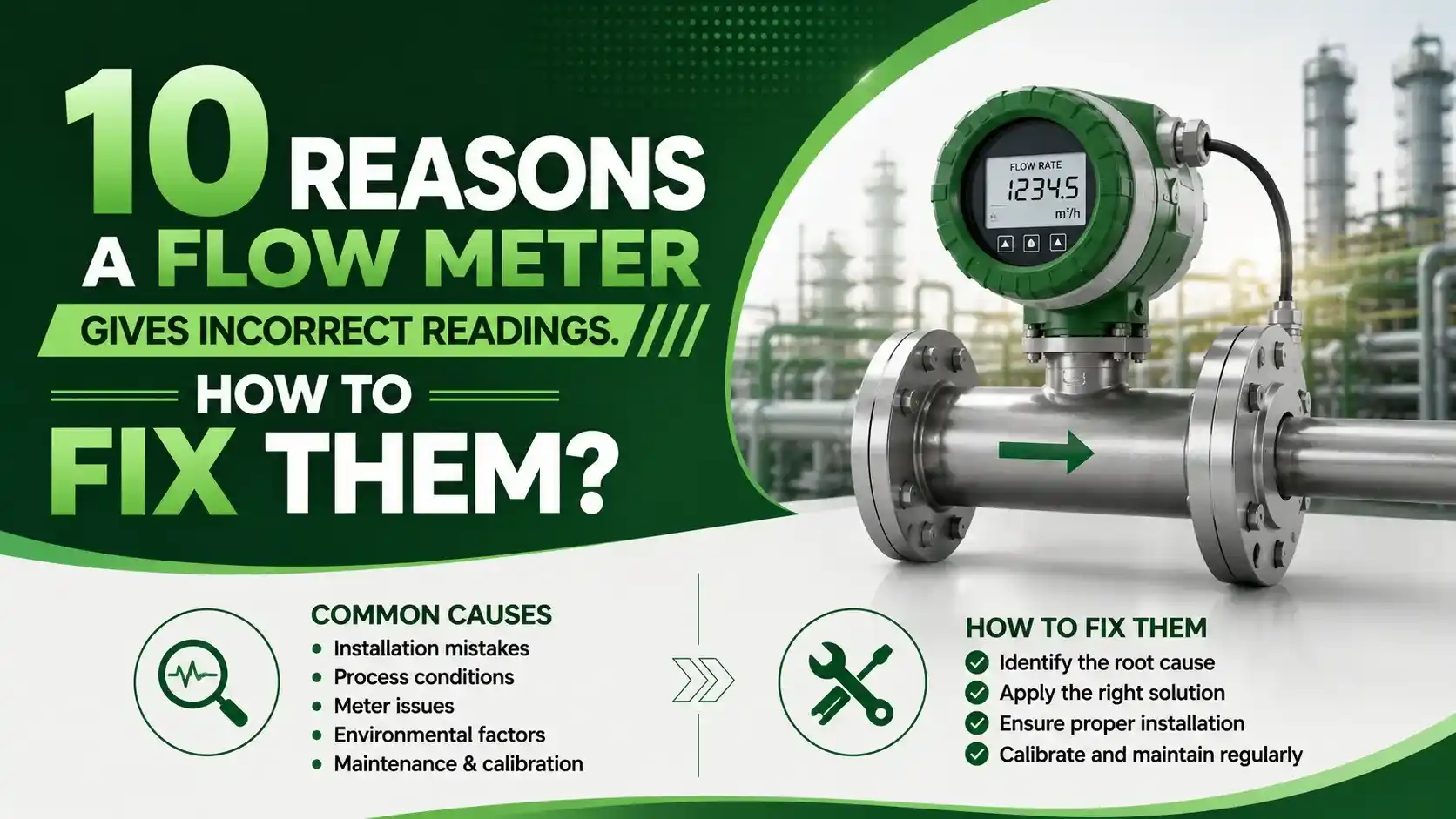
A flow meter gives incorrect readings for many reasons, from poor installation to unsuitable process conditions. Even a high quality flow meter can produce inaccurate results if it is not selected, installed, or maintained correctly.
Incorrect flow readings can lead to poor process control, increased operating costs, product quality issues, and unnecessary downtime. Fortunately, most flow measurement problems can be identified and corrected with a systematic approach.
In this guide, we explain the 10 most common reasons a flow meter gives incorrect readings and provide practical solutions to help improve measurement accuracy, drawing on the same selection principles covered in our guide to flow meter selection for wastewater applications.
Why Accurate Flow Measurement Matters
Flow meters are used in almost every industry, including oil and gas, water treatment, chemical processing, food and beverage, power generation, and manufacturing.
- Improve process efficiency
- Reduce product waste
- Protect pumps and equipment
- Maintain product quality
- Optimize energy consumption
- Meet regulatory requirements
When a flow meter gives incorrect readings, these benefits are quickly lost.
10 Reasons a Flow Meter Gives Incorrect Readings
1Incorrect Flow Meter Selection
One of the most common reasons a flow meter gives incorrect readings is choosing the wrong type of flow meter for the application. For example, a magnetic flow meter will not measure hydrocarbons, while a turbine flow meter may not perform well with dirty liquids.
2Improper Installation
Even the best flow meter can fail if installed incorrectly. Common installation mistakes include wrong flow direction, incorrect mounting position, poor pipe alignment, and mechanical stress on the meter. These issues can cause unstable or inaccurate readings.
3Insufficient Straight Pipe Length
Many flow meters require straight pipe before and after the meter to ensure smooth flow. Elbows, valves, pumps, and reducers installed too close to the flow meter create turbulence. This is another major reason a flow meter gives incorrect readings.
4Air or Gas in the Liquid
Entrapped air bubbles affect the performance of many liquid flow meters. Air pockets may develop because of pump suction problems, poor piping design, low liquid levels, or leaking suction lines. This often causes fluctuating readings.
5Dirty or Clogged Flow Meter
Over time, deposits, scale, sludge, or debris can build up inside the flow meter. A dirty sensor is another common reason a flow meter gives incorrect readings. Industries handling wastewater, chemicals, or slurries experience this problem more frequently.
6Incorrect Calibration
Flow meters gradually drift over time due to wear, environmental conditions, or process changes. If calibration is not verified regularly, a flow meter gives incorrect readings even though the instrument appears to be functioning normally.
7Process Conditions Have Changed
Many flow meters are selected based on the original process conditions. However, production changes may alter flow rate, pressure, temperature, fluid density, and viscosity. When operating conditions change, a flow meter gives incorrect readings because it is no longer working within its design limits.
8Electrical Noise or Wiring Problems
Electronic flow meters depend on stable electrical signals. Loose wiring, poor grounding, damaged cables, or electromagnetic interference can cause unstable measurements.
9Wrong Flow Meter Settings
Many digital flow meters require configuration during commissioning. Incorrect settings such as pipe diameter, measurement units, fluid type, output scaling, and communication parameters can cause significant measurement errors.
10Normal Wear and Aging
Like any industrial instrument, flow meters experience wear over time. Moving parts, sensors, electronics, and seals gradually deteriorate. Eventually, a flow meter gives incorrect readings because components have reached the end of their service life.
Quick Troubleshooting Guide
| Problem | Possible Cause | Solution |
|---|---|---|
| Reading too high | Wrong configuration | Verify settings |
| Reading too low | Dirty sensor | Clean the flow meter |
| Reading fluctuates | Air in the pipeline | Remove trapped air |
| No reading | Wiring fault | Check electrical connections |
| Unstable reading | Flow turbulence | Increase straight pipe length |
| Intermittent signal | Poor grounding | Improve grounding and shielding |
Best Practices for Reliable Flow Measurement
To reduce the chances that a flow meter gives incorrect readings, follow these best practices.
- Select the correct flow meter technology
- Install the meter according to manufacturer guidelines
- Maintain recommended straight pipe lengths
- Keep the pipeline completely full where required
- Inspect and clean the meter regularly
- Calibrate the instrument at scheduled intervals
- Verify electrical connections
- Review configuration settings after maintenance
- Monitor process changes that may affect measurement
- Replace aging instruments before failures occur
These simple practices can significantly improve measurement reliability and reduce maintenance costs, and pair well with the protection strategies covered in our guide to pump protection using pressure, flow, and temperature instruments.
Frequently Asked Questions
Why does my flow meter show unstable readings?
Unstable readings are often caused by air bubbles, flow turbulence, poor grounding, or incorrect installation.
Can a dirty flow meter affect accuracy?
Yes. Dirt, scale, or debris on the sensing element can reduce measurement accuracy and should be removed during routine maintenance.
How often should a flow meter be calibrated?
Calibration frequency depends on the application. Critical industrial processes may require annual or more frequent calibration.
Does pipe layout affect flow meter accuracy?
Yes. Elbows, valves, and pumps installed too close to the flow meter can create turbulence and affect measurement accuracy.
Source Reliable Flow Meters and Support in the UAE and Gulf
SWME Control Systems Trading LLC supplies flow meters, flow transmitters, and flow switches to industrial, oil and gas, and water treatment facilities across the UAE, Qatar, Oman, Kuwait, and Bahrain.
Our team can help diagnose measurement problems, confirm correct sizing, and recommend the right technology for your process. Browse our flow transmitter range and flow switch product line, explore more application notes in our Flow blog category, or browse the full blog. For help troubleshooting a specific flow meter or selecting a replacement, reach out through our contact page.


